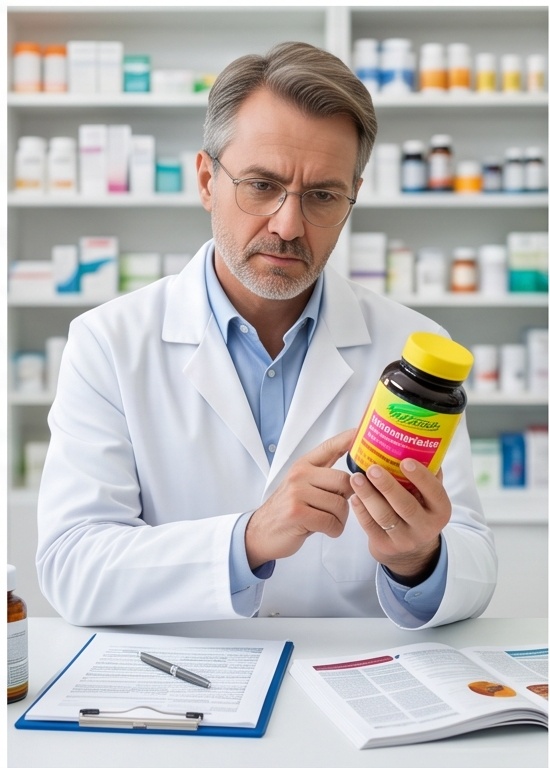
How to Read Supplement Labels Like an Expert
The global dietary supplement industry generates over $150 billion in annual revenue, yet the vast majority of consumers have little training in how to evaluate what they are actually buying. Supplement labels are designed to sell, not to educate — and the gap between what a label implies and what the product actually delivers can be enormous. Marketing language like “proprietary blend,” “clinically studied,” and “maximum absorption” often obscures rather than clarifies what you are getting and whether it is worth your money.
Reading a supplement label skillfully is not about being cynical — it is about being informed. Many supplements are genuinely valuable tools for supporting health and performance when chosen correctly. The challenge is that the regulatory environment in the United States places the burden of quality verification largely on the consumer rather than on manufacturers. Understanding what to look for — and what to look out for — transforms supplement shopping from a game of chance into a genuinely strategic health decision.
Understanding the Regulatory Landscape
In the United States, dietary supplements are regulated under the Dietary Supplement Health and Education Act of 1994 (DSHEA), which classifies supplements not as drugs but as a distinct category of food products. This distinction has significant consequences: unlike pharmaceutical drugs, supplements are not required to demonstrate safety or efficacy before reaching the market. The FDA can take action against a supplement only after it is on the market and has been shown to cause harm — a reactive rather than preventive approach.
This regulatory framework means that consumers cannot assume a supplement is safe or effective simply because it is sold in a reputable store or widely marketed. Manufacturers are responsible for ensuring their products are safe, but independent enforcement is limited. Awareness of this structure is the essential starting point for any informed supplement evaluation, because it explains why third-party testing and certification are so critical.
The Supplement Facts Panel: What Each Element Means
Serving Size and Servings Per Container
The serving size is the first number to examine, and it is frequently set strategically low to make the product appear more affordable than it is. A container listed at 30 servings with a recommended use of three servings per day actually lasts ten days — a detail that changes the cost calculation dramatically. Always calculate cost per effective dose, not cost per container. Similarly, some manufacturers list the serving as one capsule when the clinical research supporting efficacy used three or four capsules — meaning a consumer following label instructions receives only a fraction of the studied dose.
Ingredient Forms and Bioavailability
This is where the most meaningful quality differences between supplements are found. Many nutrients exist in multiple chemical forms with dramatically different rates of absorption and utilization by the body — a property called bioavailability. Choosing the wrong form can mean spending money on a nutrient that passes through the body largely unabsorbed.
Key examples: Magnesium oxide is cheap and widely used but has only 4% absorption compared to 80% or more for magnesium glycinate or magnesium malate. Vitamin B12 as cyanocobalamin (synthetic form) requires enzymatic conversion in the body to become active, whereas methylcobalamin and adenosylcobalamin are the bioactive forms used directly by cells. Vitamin D3 (cholecalciferol) is significantly more effective at raising serum vitamin D levels than D2 (ergocalciferol). Iron as ferrous sulfate is the most common form but is often poorly tolerated; ferrous bisglycinate has equivalent or superior absorption with substantially fewer gastrointestinal side effects. Curcumin (from turmeric) has extremely low native bioavailability; products containing BCM-95, Meriva (phosphatidylcholine complex), or piperine (black pepper extract) dramatically improve absorption — by up to 2000% in some formulations.
Dosage and Clinical Relevance
A supplement label can list an ingredient that has clinical evidence supporting it while providing a dose far below what research demonstrated to be effective. This practice — sometimes called “fairy dusting” — allows manufacturers to list high-status ingredients on the label without providing therapeutically relevant amounts. Knowing the evidence-based dosages for common supplements is essential for evaluating whether a product is formulated to actually work.
Reference points for key supplements: Vitamin D3 — most research on deficiency correction uses 2,000 to 5,000 IU daily (personalized to blood levels). Magnesium — 300 to 400 mg daily of an absorbable form for most adults. Omega-3 fatty acids (EPA + DHA combined) — 1,000 to 3,000 mg daily for anti-inflammatory benefits, with at least 60% of the omega-3 content coming from EPA and DHA (not total fish oil). Creatine monohydrate — 3 to 5 grams daily for maintenance after loading. Ashwagandha — 300 to 600 mg of a standardized extract (KSM-66 or Sensoril) for adaptogenic effects. Always verify dosages against peer-reviewed research, not manufacturer claims.
Red Flags on Supplement Labels
Proprietary Blends
A proprietary blend is a combination of ingredients listed as a group with only the total combined weight disclosed, without revealing how much of each individual ingredient is present. The stated rationale is to protect trade secrets; the practical effect is that you cannot verify whether any single ingredient is present at a meaningful dose. A proprietary blend showing 500 mg total weight that includes five ingredients could contain 490 mg of the cheapest ingredient and trace amounts of everything else — and you would have no way to know.
Unless a proprietary blend comes with specific individual ingredient disclosure through third-party verification, it is a significant red flag. Reputable manufacturers who genuinely formulate at efficacious doses have no reason to hide ingredient amounts; they would advertise them as a selling point.
Misleading Claims and Regulatory Loopholes
Supplement labels in the U.S. can make two types of claims: structure/function claims and health claims. Structure/function claims — such as “supports bone health” or “promotes immune function” — do not require FDA approval or clinical evidence; manufacturers simply must notify the FDA within 30 days of first marketing. These claims can sound authoritative while being based on extremely limited or no human clinical evidence.
Language to scrutinize includes terms like “clinically studied” (which ingredient? at what dose? for what outcome?), “doctor-formulated” (does not imply clinical evidence for efficacy), “natural” (arsenic is natural; natural does not mean safe or effective), “maximum potency” (compared to what?), and “patented formula” (patents protect formulations but do not guarantee efficacy). The bar for using these phrases is remarkably low under current regulations.
Artificial Additives and Unnecessary Fillers
Supplement “other ingredients” — often listed below the Supplement Facts panel — can include synthetic dyes, artificial sweeteners, hydrogenated oils, titanium dioxide (a whitening agent with emerging safety concerns), carrageenan, and various preservatives. These additives serve primarily manufacturing convenience and cosmetic purposes, not the consumer’s health. For individuals with sensitivities or those seeking clean supplementation, checking the full ingredient list beyond the active compounds is important.
Third-Party Testing and Certification: The Most Important Quality Signal
Because the supplement industry is not pre-market regulated, independent third-party testing is the primary mechanism by which quality can be verified. Several organizations conduct rigorous independent audits of supplement manufacturing and product content, and their seals on a label carry genuine weight.
The most recognized certifications include NSF International (NSF Certified for Sport is particularly relevant for athletes, as it screens for banned substances as well as label accuracy), USP (U.S. Pharmacopeia) — which verifies that a product contains what the label claims at the stated potency, is free of harmful contaminants, and will dissolve appropriately — and Informed Sport / Informed Choice, another athlete-focused program that tests for both label accuracy and prohibited substance presence. ConsumerLab is an independent testing organization that regularly publishes product analysis reports (subscription required) covering dozens of supplement categories and identifying products that fail to meet label claims or contain contaminants.
Special Considerations for Key Supplement Categories
Fish Oil and Omega-3 Supplements
Fish oil is one of the most commonly adulterated supplements. The relevant numbers on the label are EPA and DHA content specifically — not total fish oil weight. A “1000 mg fish oil” softgel may contain only 300 mg combined EPA and DHA if the oil is of standard concentration. High-concentration formulas or rTG (re-esterified triglyceride) forms offer higher EPA and DHA per capsule and are worth the premium for consistent therapeutic dosing. Oxidation is another major concern: oxidized fish oil produces aldehydes that may cause harm rather than benefit. Products with low TOTOX (total oxidation) values and those stored in dark glass or nitrogen-flushed packaging offer better quality assurance.
Protein Supplements
Protein spiking — a practice in which cheaper nitrogen-containing compounds (like taurine, glycine, or creatine) are added to protein powders to inflate the apparent protein content on nitrogen-based testing — has been documented by ConsumerLab and other testing organizations. Products certified by Informed Sport or NSF that list full amino acid profiles, including leucine content (the primary driver of muscle protein synthesis), provide more transparent quality assurance. Leucine content per serving should be at least 2 to 3 grams to reliably stimulate muscle protein synthesis.
Important Considerations
Even high-quality, well-dosed supplements are tools — not substitutes for a nutrient-dense diet, adequate sleep, regular exercise, and comprehensive medical care. The supplements with the strongest evidence base (creatine, omega-3s, vitamin D, magnesium) support health outcomes that are also supported by diet and lifestyle — they work best as adjuncts, not replacements.
Interactions between supplements and medications are real and clinically significant. St. John’s Wort can reduce the effectiveness of numerous prescription medications. High-dose vitamin E can increase bleeding risk. Iron supplementation can impair thyroid medication absorption. Always disclose your supplement use to your prescribing physician and pharmacist.
FAQ
Are expensive supplements always better than cheaper ones?
Not necessarily, but extremely low prices are often a warning sign. Cheap supplements frequently use low-bioavailability ingredient forms, inadequate doses, or skip third-party testing — all of which reduce both efficacy and safety. A mid-range product with NSF or USP certification and transparent labeling often represents better value than either the cheapest or the most heavily marketed premium option.
What does “standardized extract” mean?
A standardized extract is a plant-derived ingredient processed to consistently contain a specified percentage of one or more active compounds. For example, “ashwagandha extract standardized to 5% withanolides” guarantees that each dose contains a defined amount of the compounds believed to be responsible for the therapeutic effect. Standardized extracts are generally preferable to whole-herb powders because they provide consistent, predictable potency across batches.
Can I trust supplement reviews online?
Consumer reviews are unreliable guides to supplement quality because most reviewers cannot assess ingredient forms, doses, or manufacturing quality — they can only report their subjective experience, which is heavily influenced by placebo effects. Professional analysis from organizations like ConsumerLab, or certifications from NSF and USP, are far more reliable quality signals than star ratings or testimonials.
How do I know if a supplement is actually absorbing?
For most supplements, blood testing before and after a supplementation period provides the most direct evidence of absorption and effect. Vitamin D, B12, iron (as ferritin), and magnesium (as red blood cell magnesium) can all be measured via standard blood tests. For other supplements, tracking validated functional outcomes — energy levels, performance metrics, inflammatory markers — over a six to twelve week period provides indirect evidence of effect.
Is it possible to overdose on vitamins and minerals from supplements?
Yes, particularly with fat-soluble vitamins (A, D, E, K) and certain minerals including iron and selenium. Water-soluble vitamins (C, B vitamins) are generally excreted when consumed in excess, but very high doses of some (particularly B6 and niacin) can cause harm. Always follow established Tolerable Upper Intake Levels (ULs) published by the Institute of Medicine and consult a healthcare provider before taking high-dose single-nutrient supplements.
Knowledge Is the Most Valuable Supplement
The supplement industry will not become more transparent on its own — the incentives run in the opposite direction. But consumers who understand how to read a label, recognize quality signals, and verify efficacy against real clinical evidence cannot be misled by clever marketing. Every purchase decision you make with this knowledge is both better for your health and sends a market signal that quality matters. Start with the label, verify with certification, and confirm with evidence — in that order, every time.
Disclaimer: This article is for informational and educational purposes only. It does not constitute medical advice, diagnosis, or treatment. Supplements can interact with medications and may not be appropriate for all individuals. Always consult a qualified healthcare professional or licensed pharmacist before beginning any new supplement regimen.